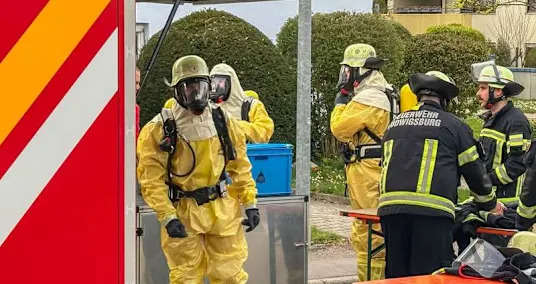
An Easter egg hunt in south-western Germany took a worrying turn on Sunday when two men discovered a vial labelled "Polonium 210" in a garden, triggering an emergency response as authorities tested for the potentially lethal radioactive substance.
District fire chief Andy Dorroch said initial on-site measurements were carried out to detect radioactivity, but all of them came back negative. He added that the two men were unharmed.
The discovery led to a large-scale operation involving the fire brigade and police in the town of Vaihingen an der Enz, north-west of Stuttgart.
It remains unclear whether the 50-millilitre vial actually contained polonium 210.
The fire brigade will secure the vial in accordance with safety precautions, the fire chief said.
Reports said the area around the site where the bottle was found was cordoned off.
According to the Federal Office for Radiation Protection (BfS), the chemical element polonium is particularly dangerous if inhaled or absorbed through the skin via open wounds.
LATEST POSTS
- 1
 NASA begins fueling rocket to launch astronauts on the first lunar trip in half a century
 - 2Find the Effect of Web-based Entertainment on Society: Exploring the Computerized Scene
- 3Emotional wellness Matters: My Fight with Tension
- 4Lebanon says Israeli strike killed 13 people near Palestinian refugee camp
- 5The 2026 'Super Bowl of Astronomy' starts today — here's what's happening



- ‘Trip of suffering’: Gaza evacuee details 24-hour journey to South Africa
- Step by step instructions to Pick the Ideal Authorize Internet Advertising Degree Program
- 6 Modest and Strong Tire Brands
- Picking Childcare Administrations for Your Loved ones
- Argentina reportedly delaying embassy move over Israeli company's oil project near Falklands
- Most loved Caf\u00e9 Chain: Where Do You Get Your Caffeine Fix
- If everyone on Earth sat in the ocean at once, how much would sea level rise?
- Bullets in Luigi Mangione’s bag convinced police that he was UnitedHealthcare CEO killing suspect
- Cannabis reclassification could 'open the floodgates' for research, scientists say